Private Islands for Sale in Croatia
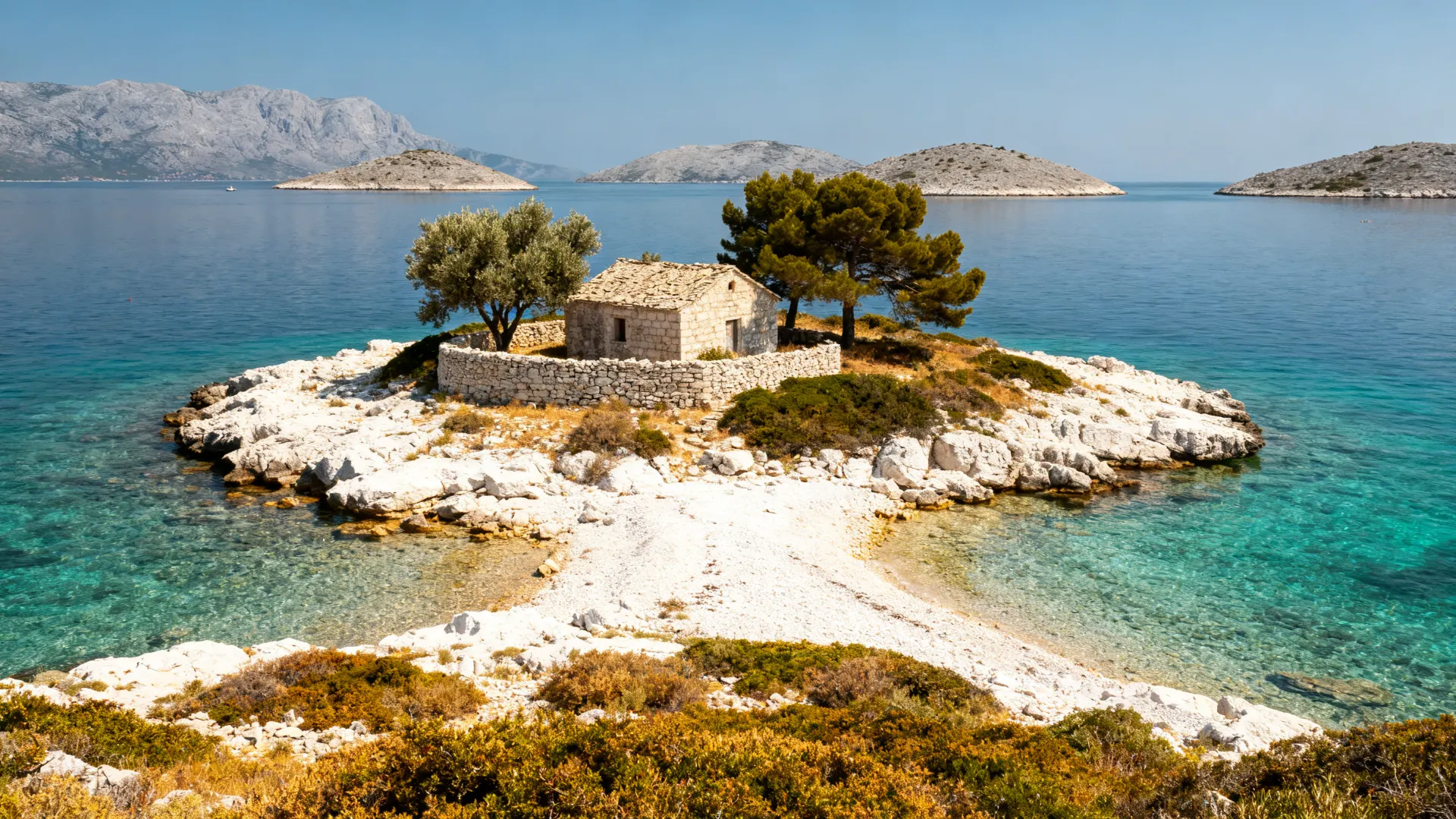
Table of contents
Croatia counts 1,244 islands, islets and rocks along the Adriatic. Most belong to the state, but a few private ones come up for sale each year. In November 2026 prices ran from €1.5 million (US$1.7 million) for a bare islet near Šibenik to €20.4 million (US$23.7 million) in Istria.
EU citizens buy like Croatians. Others need consent from the Ministry of Justice. On small islands two more rules decide the deal. The state gets the first offer, and you can only build where the local plan allows.
Prices: islands for sale in Croatia in 2026
| Island | Where | Size | What you get | Asking price |
|---|---|---|---|---|
| Mali Kosmač | Šibenik archipelago | 1.2 acres | Bare islet with Mediterranean scrub | €1.5 million (US$1.7 million) |
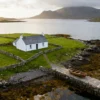
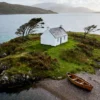
| Veliki Školj | Bay of Mali Ston, Pelješac | 5.4 acres | Old stone house, olive trees, a spring | €3.25 to 4 million (US$3.8 to 4.6 million) |
| Sridnja | Zadar archipelago | 31.6 acres | 19th century stone house, rocky coves | €6 million (US$7 million) |
| Žižanj | Near Pašman | 12 acres | Seafront villa | €7.5 million (US$8.7 million) |
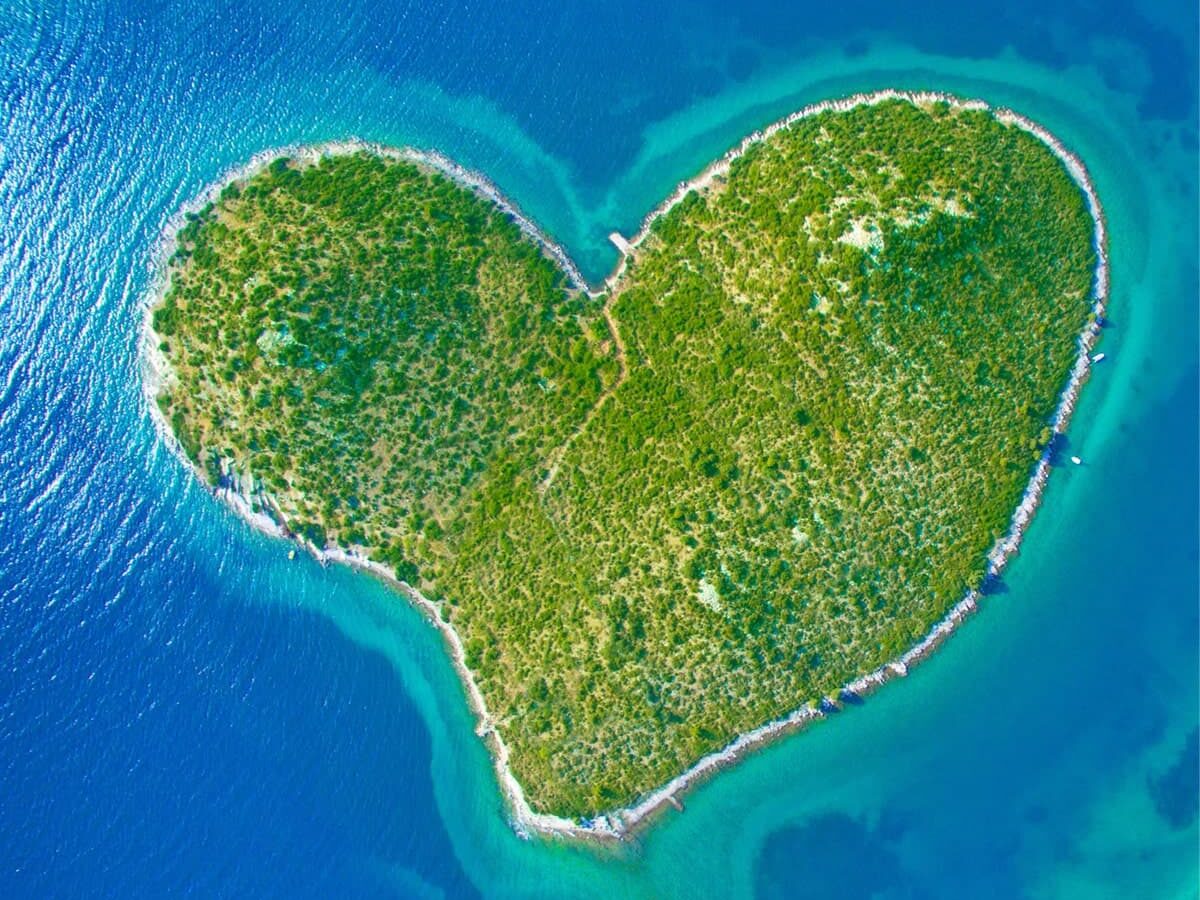
| Part of Galešnjak | Pašman channel | 7.4 acres of a 35-acre island | Part of the heart-shaped “Island of Love” | €13 million (US$15.1 million) |
| Ceja | Medulin Bay, Istria | 25 of 40 acres | Beaches, a restaurant and a small house | €20.4 million (US$23.7 million) |
Asking prices from Island Seeker, Private Islands Online and our catalogue, checked in November 2026. Two agents list Veliki Školj at different prices. On Ceja, 15 acres stay with the state.
Croatians also sell plots on islands, not whole islands. You will find these on Njuškalo and nekretnine.hr. Many are farmland, so check the zoning before you look at the view.
See all islands for sale in Croatia or the wider European market.
Who can buy
- EU citizens buy on the same terms as Croatians, with no extra approval.
- Non-EU citizens can buy if their own country lets Croatians buy property. This is the reciprocity rule. They also need consent from the Ministry of Justice, which makes the deal slower.
- Farmland has extra limits for foreign buyers, and land in protected areas can need more checks.
Ask a Croatian lawyer to check reciprocity for your country before you sign anything.
The state gets the first offer
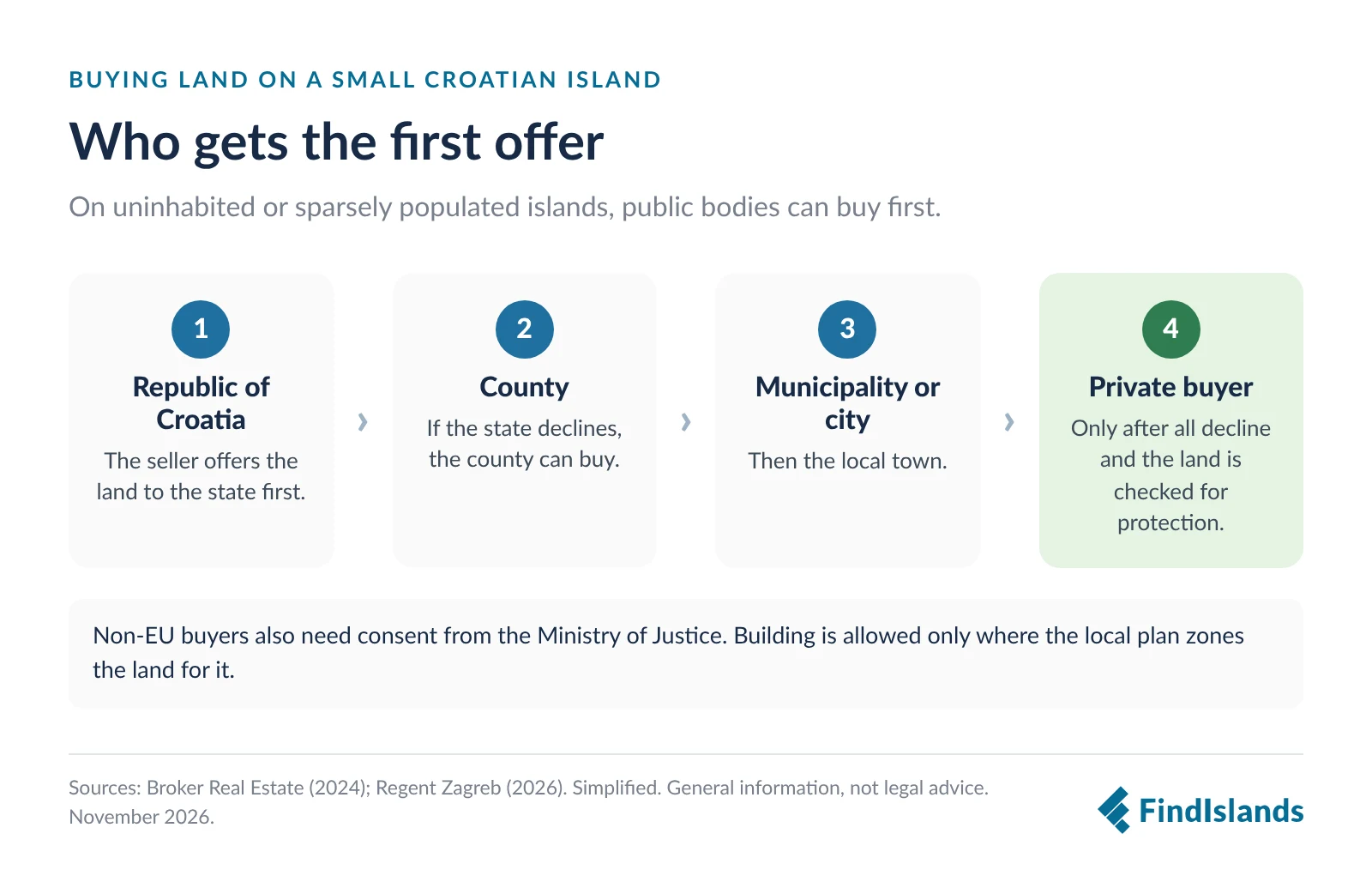
Land on an uninhabited or sparsely populated island cannot go straight to a private buyer. The seller must first offer it to the Republic of Croatia, then to the county, then to the town. The sale goes ahead only when all of them decline and the land is checked for protection.
So build this into your timeline. Agree the price, then wait for the public bodies to say no.
What you can build
You can only build where the local spatial plan zones the land for building. Many small islands are zoned as farmland or sit in protected areas, such as Kornati National Park. On farmland you may get no more than a small shed, or the right to restore what stands.
Old buildings help. A house built before 1968 counts as legal, and you can restore it. That is why an island with a ruined stone house can be worth far more than a bare one.
The shore belongs to the maritime domain. It stays public, so you cannot fence off the beach. A jetty or mooring needs a concession.
Costs and taxes
The buyer pays a 3% real estate transfer tax on the price. New buildings sold with VAT are exempt. Add a lawyer, a notary and often an agent’s fee.
Owning property gives no right to live in Croatia. Non-EU citizens can stay 90 days in any 180 in the Schengen area. A longer stay needs a residence permit.
Seasons and access
Summer on the Adriatic is dry, hot and busy, with calm seas. The bora, a cold northeast wind, can blow hard in winter, so check the harbour on the island’s sheltered side. Most small islands have no power, water or ferry. Plan for solar panels, a rain cistern and your own boat.
Croatia sits between two other island markets. In Italy most islands are old forts in lagoons. In Greece the islands are larger, but border rules apply to non-EU buyers.
Frequently Asked Questions
In November 2026 whole islands were listed from €1.5 million (US$1.7 million) to €20.4 million (US$23.7 million).
Yes. EU citizens buy like Croatians. Non-EU buyers need reciprocity with their home country and consent from the Ministry of Justice.
No whole island. For that money you may find a share of farmland on an inhabited island, usually with no right to build.
Only where the local plan zones the land for building. On farmland and in national parks you can usually only restore buildings that already stand.
No. Property gives no residence right. Non-EU buyers need a separate residence permit for long stays.
Prices are asking prices unless marked sold, not valuations. This guide is general information, not legal or tax advice.
Sources
- https://regent.hr/en/blog/how-foreign-nationals-can-buy-real-estate-in-croatia
- https://broker.hr/en/blog/private-islands-in-the-republic-of-croatia
- https://total-croatia-news.com/lifestyle/croatian-islands-3/
- https://island-seeker.com/islands-for-sale/croatia
- https://www.privateislandsonline.com/region/europe/croatia