Islands for Sale in the UK
Table of contents
- Short answer
- Islands for sale in the UK right now
- How much does an island cost in the UK?
- Can foreigners buy an island in the UK?
- What you own: the beach, the seabed and moorings
- Can the public land on your island?
- Building on an island
- What it is like to own an island in the UK
- Where to buy
- How to buy an island in England, Wales or Northern Ireland
- Costs of buying and owning
- Risks and what to check
- Frequently Asked Questions
- Related guides
- Sources
Short answer
Yes. You can buy a whole island in England, Wales or Northern Ireland, and foreigners can buy too.
In 2023–2026, whole islands were offered or sold from £75,000 (US$100,000) for a marsh island on the River Medway to £25 million (US$33.5 million) for Osea Island in Essex.
- Under £150,000 (US$200,000) you get an empty river, marsh or lake island.
- An island with a farmhouse to renovate can cost around £350,000 (US$470,000).
- A ready-to-use home, usually a converted fort or a house on a river island, costs about £1–3 million (US$1.3–4 million).
Before you buy, check who owns the beach, whether the island is protected, and how stamp duty treats any building on it.
Looking for Scotland? Most UK islands are in Scotland, where the law and taxes are different. See our guide to islands for sale in Scotland.
Islands for sale in the UK right now
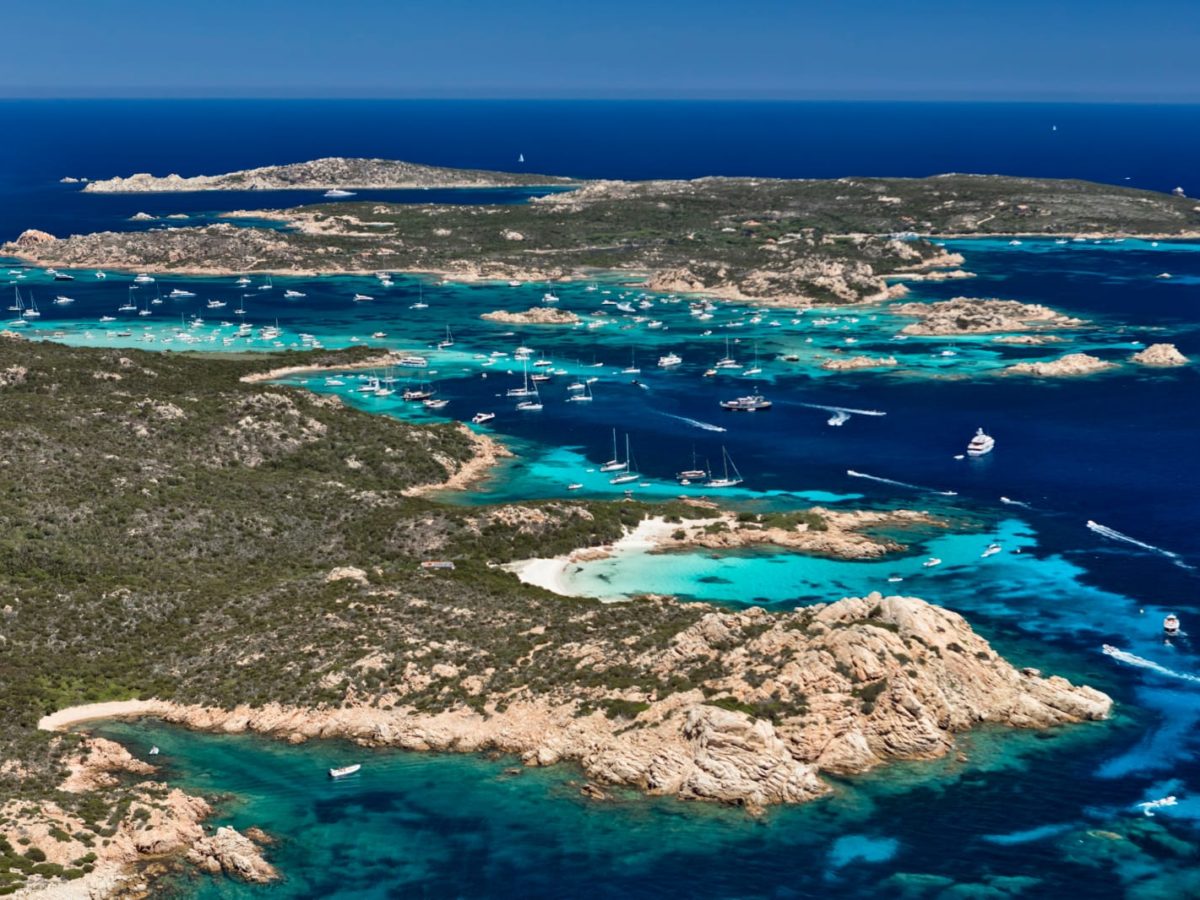
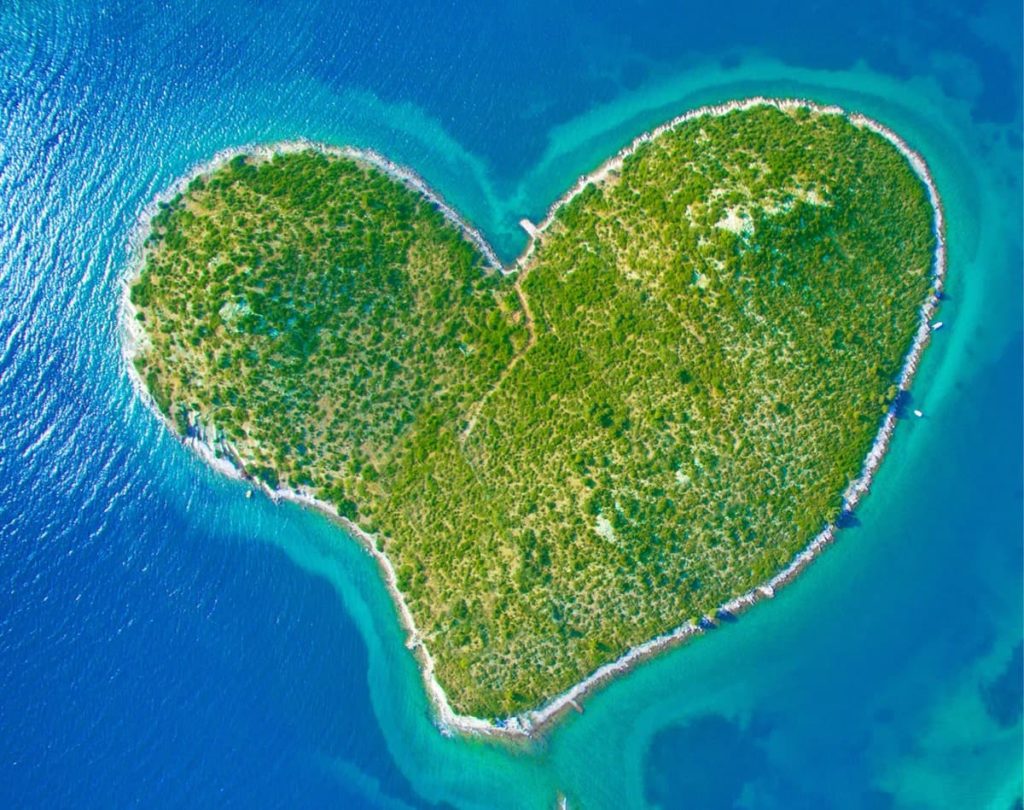
FindIslands does not list an island in the UK yet. Below are other islands in Europe from our catalogue. You can also browse all islands for sale.
Islands for sale elsewhere in Europe

Selling a British island? List it on FindIslands →
How much does an island cost in the UK?
There is no public record of island sales. The best guide is what agents asked and what auctions achieved. These are the whole islands in England, Wales and Northern Ireland we could check between 2023 and October 2026. Dollar figures use £1 = US$1.34.
| Island | Where | Size | What’s on it | Price | Status |
|---|---|---|---|---|---|
| Burham Island | River Medway, Kent | 25 acres | Wildlife marsh, no services | Guide £75,000 ($100k) + VAT | Sold subject to contract, Jul 2026 |
| Hallsmead Ait | River Thames, Shiplake | 5 acres | Woodland, landing pontoon | Sold £99,470 ($133k) | Auction, Nov 2025 |
| Dunnyneill Islands | Strangford Lough, Co Down | Two islets | Low-tide causeway | £108,000 ($145k) | Listed Jun 2025 |
| Ynys Gifftan | Dwyryd estuary, Gwynedd (tidal) | 18 acres | Farmhouse to renovate, no mains power | Guide £350,000 ($469k) | Sold, price not disclosed, 2026 |
| Spitbank Fort | The Solent, off Portsmouth | Sea fort | Nine bedrooms, hot pool | Sold £1.01m ($1.35m) | Auction, Jun 2024 |
| No Man’s Fort | The Solent | Sea fort | Former hotel, 23 rooms | Sold £1.12m ($1.5m) | Auction, Jun 2024 |
| Drake’s Island | Plymouth Sound, Devon | 6 acres | Old forts and barracks, jetty | Offers over £2m ($2.68m) | For sale, Jul 2026 |
| Holm & Hollyhock Islands | River Thames, Wraysbury | 3 acres | Five-bed house, bridge | £3m ($4m) in 2025; auction guide £1.45m ($1.94m) in Oct 2026 | Unsold at auction |
| Thorne Island | Milford Haven, Pembrokeshire | 2.5 acres | Historic fort, five bedrooms, helipad | Offers over £3m ($4m) + VAT | Still available, Oct 2026 |
| Belle Isle Estate | Upper Lough Erne, Fermanagh | 448 acres, four islands | Castle, 17 cottages, wedding business | Guide £7.5m ($10m) | Sold, price not disclosed, Nov 2024 |
| Burgh Island | Bigbury-on-Sea, Devon (tidal) | 21 acres | Art Deco hotel, pub | £15m ($20m) | Withdrawn, Sep 2024 |
| Osea Island | Blackwater Estuary, Essex (tidal) | 380 acres | 38 properties, pub, studio | Guide £25m ($33.5m) | Listed Apr 2025 |
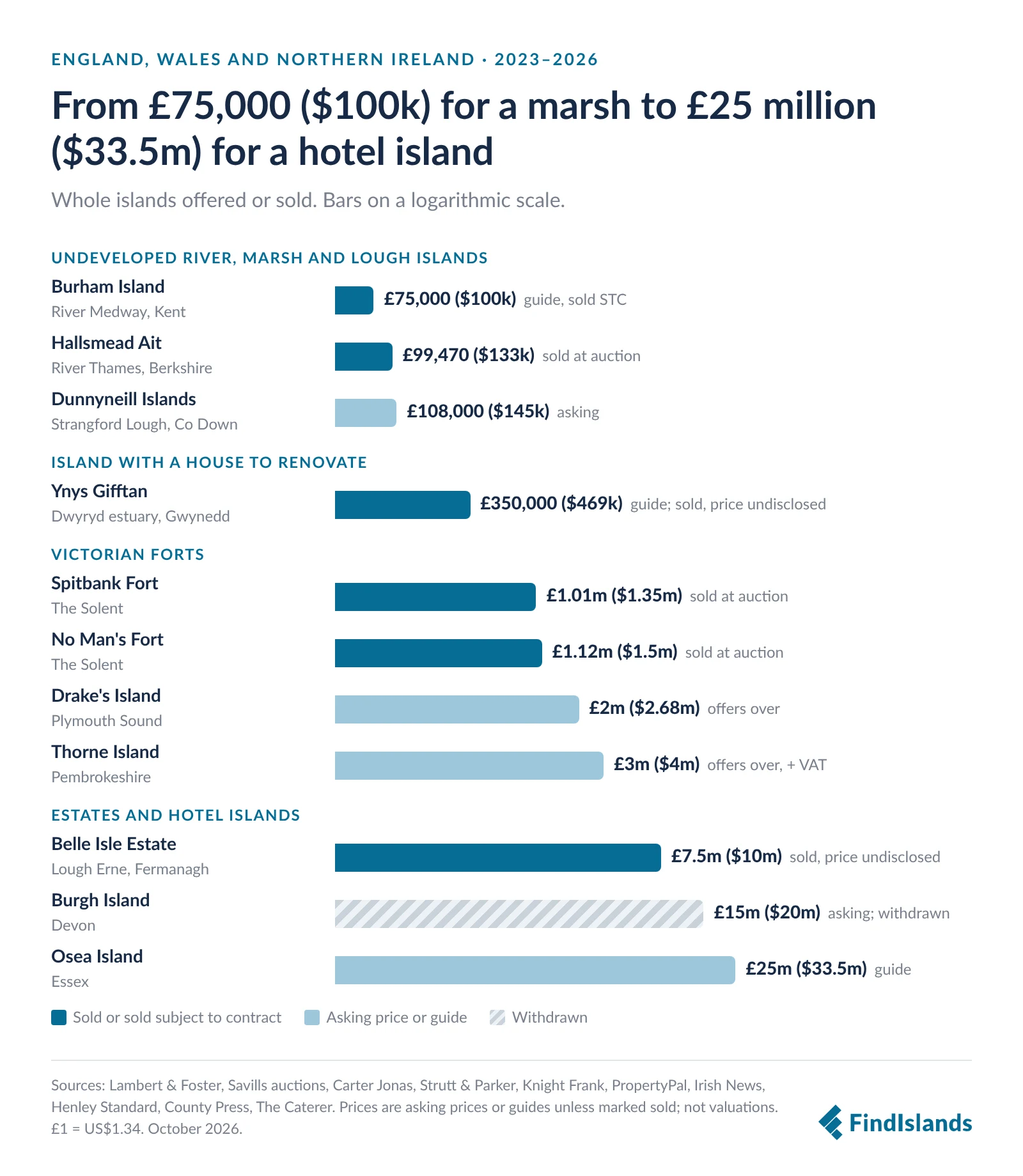
What this means for a buyer:
- Islands under £100,000 ($134,000) are land, not homes. Burham and Hallsmead Ait are a marsh and a wood with no services. You would need planning permission to build anything.
- Sea forts are a British speciality. Two Solent forts sold at auction for about £1 million ($1.34 million) each in 2024. Most forts are protected monuments, which limits what you can change.
- Prices fall as well as rise. Drake’s Island was marketed at £6 million ($8 million) in 2018 and is now offered at £2 million ($2.68 million). Holm Island dropped from £3 million to £1.45 million and still did not sell.
- Very few come up. In late October 2026, the main UK land portal listed only two islands in England, and one was already sold.
Can foreigners buy an island in the UK?
Yes. There are no restrictions on foreign buyers in England, Wales or Northern Ireland. Islands are almost always sold freehold, which means you own them outright with no time limit.
You can buy in your own name, jointly or through a company. Two things change if you buy from abroad:
- Through a non-UK company: the company must first register on the UK Register of Overseas Entities. Without this, it cannot be registered as the owner.
- As a non-UK resident: in England and Northern Ireland you pay an extra 2% stamp duty on a home if you spent fewer than 183 days in the UK in the year before buying.
The government can review purchases of land near sensitive sites, such as forts next to naval bases. Normal money-laundering checks also apply.
Owning an island does not give you a UK visa, residency or citizenship. The UK has no residency-by-investment route for property buyers.
The Channel Islands and the Isle of Man are not part of the UK and have their own property rules.
What you own: the beach, the seabed and moorings
The beach may belong to someone else. The strip between high and low tide is called the foreshore. The Crown Estate owns about half of it in England, Wales and Northern Ireland, and the seabed. The Duchies of Cornwall and Lancaster own long stretches too. Your title plan shows where your land stops.
A mooring needs consent from whoever owns the seabed. Outside a harbour, you may also need a marine licence.
Many islands are not yet on the Land Registry. About one in ten pieces of land in England and Wales is still unregistered. Buying one means a first registration, which can take the Land Registry many months.
Can the public land on your island?
Much less than in Scotland. This is one reason English and Welsh islands appeal to buyers who want privacy.
- England: there is no general right to roam on private land. The England Coast Path does not include islands, unless you can walk to them by bridge, causeway or across the beach at low tide. So a tidal island can be on the coast path.
- Wales: the coast path follows existing paths. The English island rules do not apply.
- Northern Ireland: there is no general right to roam.
Any public footpath that already crosses the island stays after you buy.
Building on an island
You need planning permission and Building Regulations approval for a new home or a big conversion. Islands often add extra layers:
- Nature sites: on a protected site, many works need approval from Natural England, Natural Resources Wales or DAERA in Northern Ireland. You must also tell them when you buy.
- Forts and historic buildings: most sea forts are protected monuments, and many island buildings are listed. Works, even inside, need special consent. Doing them without consent is a crime.
- Flood risk: river islands, such as those on the Thames, are usually in high flood-risk zones. A new home needs a flood risk assessment and a safe escape route. Works near a main river need an Environment Agency permit.
What it is like to own an island in the UK
- Getting there: by boat, or on foot at low tide for tidal islands. Learn the tide times: tidal crossings catch people out every year.
- Seasons: the weather is mild but wet. Summer is the easy season. In winter, storms can stop boat trips to sea islands and forts.
- Natural risks: river islands flood, often in winter. Coastal islands face storms and erosion. Check the flood history and the state of sea walls.
- Services: most islands have no mains power or water. Our guide to island energy supply compares the options.
Where to buy
- The Thames and other rivers: small wooded islands, often sold at auction. Cheap to buy, hard to build on.
- Estuaries of Essex, Kent and Devon: marsh and tidal islands. Prices range from the cheapest to the most expensive in the UK.
- The Solent and Plymouth Sound: Victorian sea forts, sold as hotel or development projects.
- Pembrokeshire and North Wales: small coastal and tidal islands, often in national parks.
- Northern Ireland: affordable islands on Lough Erne and Strangford Lough.
How to buy an island in England, Wales or Northern Ireland
- Find a solicitor who has dealt with rural or unusual property, before you make an offer.
- Make an offer. It is not binding until contracts are exchanged, so either side can still pull out.
- Do the checks: title and boundaries (including the beach), protected status, planning history, flood risk, footpaths, access, water and power. A normal mortgage survey will not cover this.
- Arrange the money. Most lenders avoid islands, so many buyers pay cash.
- Exchange contracts (usually with a 10% deposit), then complete.
- Pay stamp duty and register the island in your name.
At an auction the deal is binding when the hammer falls. You pay a deposit on the day and must complete within a few weeks. So finish all checks and arrange the money before you bid. Many recent island sales went through auctions.
Costs of buying and owning
Stamp duty depends on whether the island has a home on it. England and Northern Ireland have Stamp Duty Land Tax (SDLT). Wales has Land Transaction Tax (LTT).
| England & NI: home | England & NI: no home | Wales: home | Wales: no home | |
|---|---|---|---|---|
| 0% up to | £125,000 ($168k) | £150,000 ($201k) | £225,000 ($302k) | £150,000 ($201k) |
| Then | 2% to £250k ($335k), 5% to £925k ($1.24m), 10% to £1.5m ($2m), 12% above | 2% to £250k ($335k), 5% above | 6% to £400k ($536k), 7.5% to £750k ($1m), 10% to £1.5m ($2m), 12% above | 1% to £250k ($335k), 5% to £1m ($1.34m), 6% above |
| Second home or company | +5% on the whole price | — | Higher rates, 5% to 17% | — |
| Non-UK resident | +2% | — | — | — |
What this means for an island:
- A run-down house usually still counts as a home. Only a building that truly cannot be lived in, such as a ruin, escapes the residential rates. The bar is high.
- An island can count as the garden of a house. In 2026 a court ruled that a small river island next to a house was part of its grounds, so the higher home rates applied to the whole price.
- An island with no building is usually not a home. Below £150,000 ($201,000) that means no stamp duty at all. If VAT is charged, it counts as part of the price.
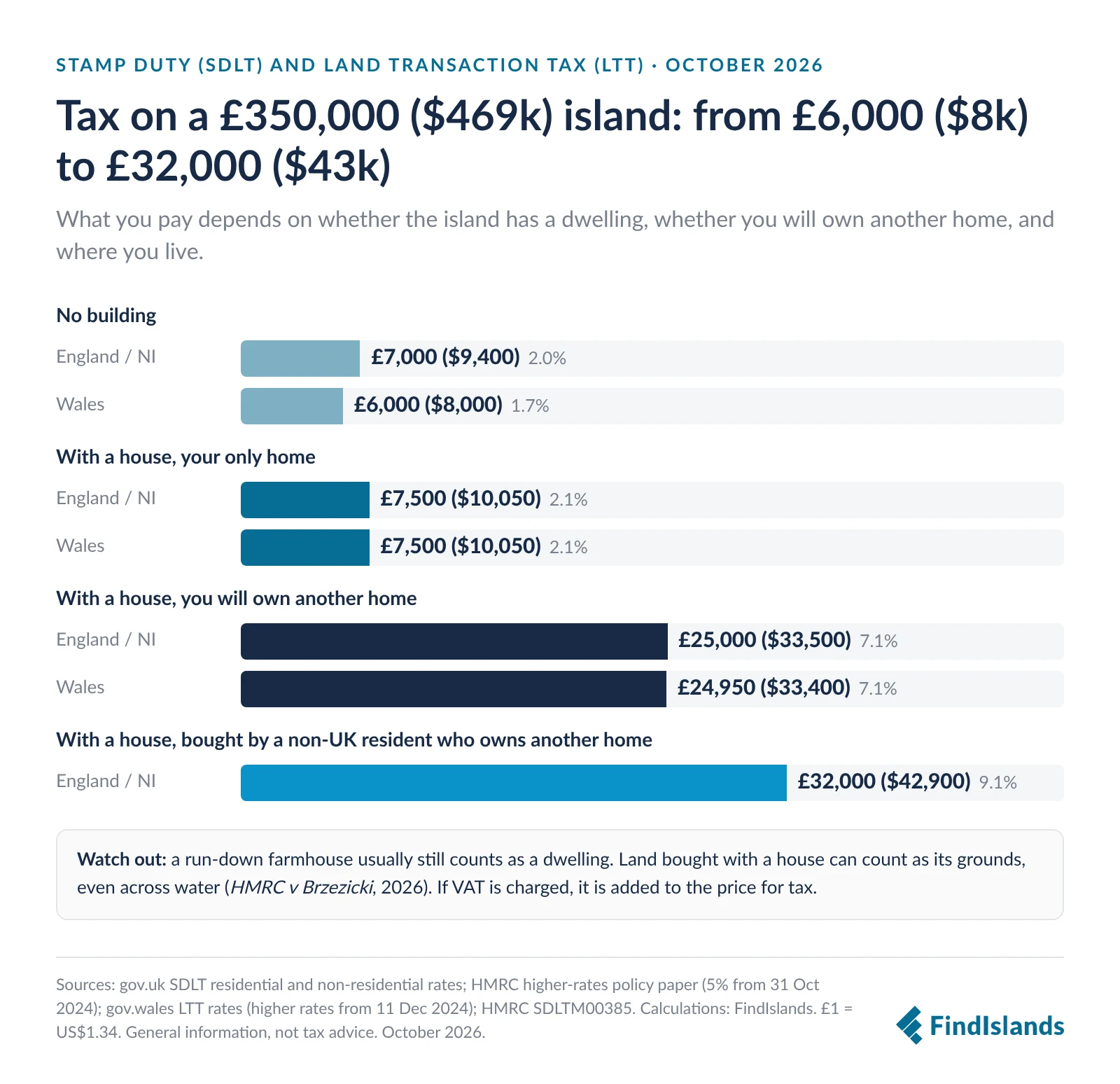
Examples (our calculation, October 2026 rates):
| Purchase | Tax |
|---|---|
| £100,000 ($134k) river island, no building (England) | £0 |
| £350,000 ($469k) island, no building (Wales) | £6,000 ($8,000) |
| £350,000 ($469k) island with a farmhouse, your only home (Wales) | £7,500 ($10,050) |
| £350,000 ($469k) island with a farmhouse, second home (Wales) | £24,950 ($33,400) |
| £350,000 ($469k) island with a cottage, second home (England) | £25,000 ($33,500) |
| Same, bought by a non-UK resident (England) | £32,000 ($42,900) |
| £1m ($1.34m) island with a house, second home (England) | £93,750 ($125,600) |
Other purchase costs: Land Registry fees of about £20–£1,105 ($27–1,480), legal fees, searches and specialist surveys. VAT can apply to commercial islands. Thorne Island, for example, was offered plus VAT, which would lift its price to about £3.6 million ($4.8 million).
Running costs: councils in England can double council tax on second homes, and Welsh councils can charge up to four times. Northern Ireland charges domestic rates instead. Add a boat and mooring, insurance, power and water, and upkeep of jetties and sea walls. Get quotes for your island, because published figures are rare.
If you are comparing the UK with countries that only offer leases, see our guide on freehold vs leasehold islands.
Risks and what to check
- Title: the whole island is in the title. Is it registered? Where does it meet the foreshore?
- Beach and moorings: who owns the foreshore and the seabed where your boat will lie?
- Protected status: nature sites, national park, listed building or protected monument.
- Planning: is a home allowed? Does any consent expire soon?
- Flood risk: flood zone, permits, safe escape route.
- Access: tide times, causeway safety, landing points, nearest slipway.
- Footpaths and leases: public paths, coast path, existing leases (Burham came with a wildfowling lease).
- Tax: home or not, surcharges, VAT.
- Money: cash or a specialist lender.
A solicitor with rural property experience should check all of this before you commit.
Frequently Asked Questions
From about £75,000 (US$100,000) for an empty river or marsh island to £15–25 million (US$20–33.5 million) for hotel islands such as Burgh and Osea. A farmhouse island to renovate costs around £350,000 (US$470,000). Ready-to-use homes and forts usually cost £1 million (US$1.34 million) or more.
Sometimes. Burham Island on the Medway was guided at £75,000 (US$100,000) in 2026, and Hallsmead Ait on the Thames sold for £99,470 (US$133,000) in 2025. Both are empty land.
Yes, if there is a legal home or you get planning permission. On protected sites, forts and flood-prone river islands, new homes are often hard to get approved.
Yes, with no special restrictions. Non-UK residents pay 2% extra stamp duty on a home in England and Northern Ireland. Overseas companies must register first.
No. Buying property does not give a UK visa, residency or citizenship.
Not necessarily. The Crown Estate owns about half of the foreshore, and the Duchies of Cornwall and Lancaster own long stretches too.
Generally not, unless a public footpath crosses it or it is a tidal or bridged island on the England Coast Path.
It is hard. Most lenders avoid unusual property, so most island buyers pay cash or use specialist lenders.
Related guides
Prices are asking prices unless marked sold, not valuations. This guide is general information, not legal or tax advice.
Sources
- https://www.gov.uk/stamp-duty-land-tax/residential-property-rates
- https://www.gov.uk/stamp-duty-land-tax/nonresidential-and-mixed-rates
- https://www.gov.wales/land-transaction-tax-rates-and-bands
- https://www.gov.uk/guidance/register-an-overseas-entity
- https://thecrownestate.co.uk/about-us/faqs
- https://www.legislation.gov.uk/ukpga/2009/23/section/300
- https://historicengland.org.uk/advice/planning/consents/smc/
- https://caselaw.nationalarchives.gov.uk/ukut/tcc/2026/125